SF Bay Area
ID Bridge: A platform helping unhoused individuals build a verified portfolio of documents and recommendations to access long-term housing.
Unhoused individuals struggle to access housing because they often can’t verify their identity. A simple, trustworthy way to create, store, and share verifiable identification documents.
A privacy-first, offline-friendly app that connects unhoused individuals, shelters, and agencies to verify documents and manage housing referrals.
Explore how AI can accelerate and enhance the research and design process throughout the designathon.
The anxiety from not knowing if you have a home for the night or next day is a global concern.
Unhoused individuals face barriers to housing due to difficulties verifying identity. There's a need for simple, trusted tools to help them build and share verifiable documentation.
"I walked four miles with a backpack and a hurt knee to get to a shelter that their website said had beds, only to be told they’ve been full since 4 PM."

"If you lose your ID, you lose your life. Nothing starts without it, and replacing it is a loop that takes months and money I don't have."

How might we build trust-centered, accessible tools that help unhoused individuals verify their identity and eligibility so they can more easily secure long-term housing?
How can we use AI to accelerate and leverage our process during research and design?
Researching online forums and articles, using AI to condense the information.
We researched key pain points unhoused individuals face when finding shelter, using Gemini and Reddit to identify and validate the top five concerns from real user experiences.
Used AI + Google to identify potential research papers and problem spaces.
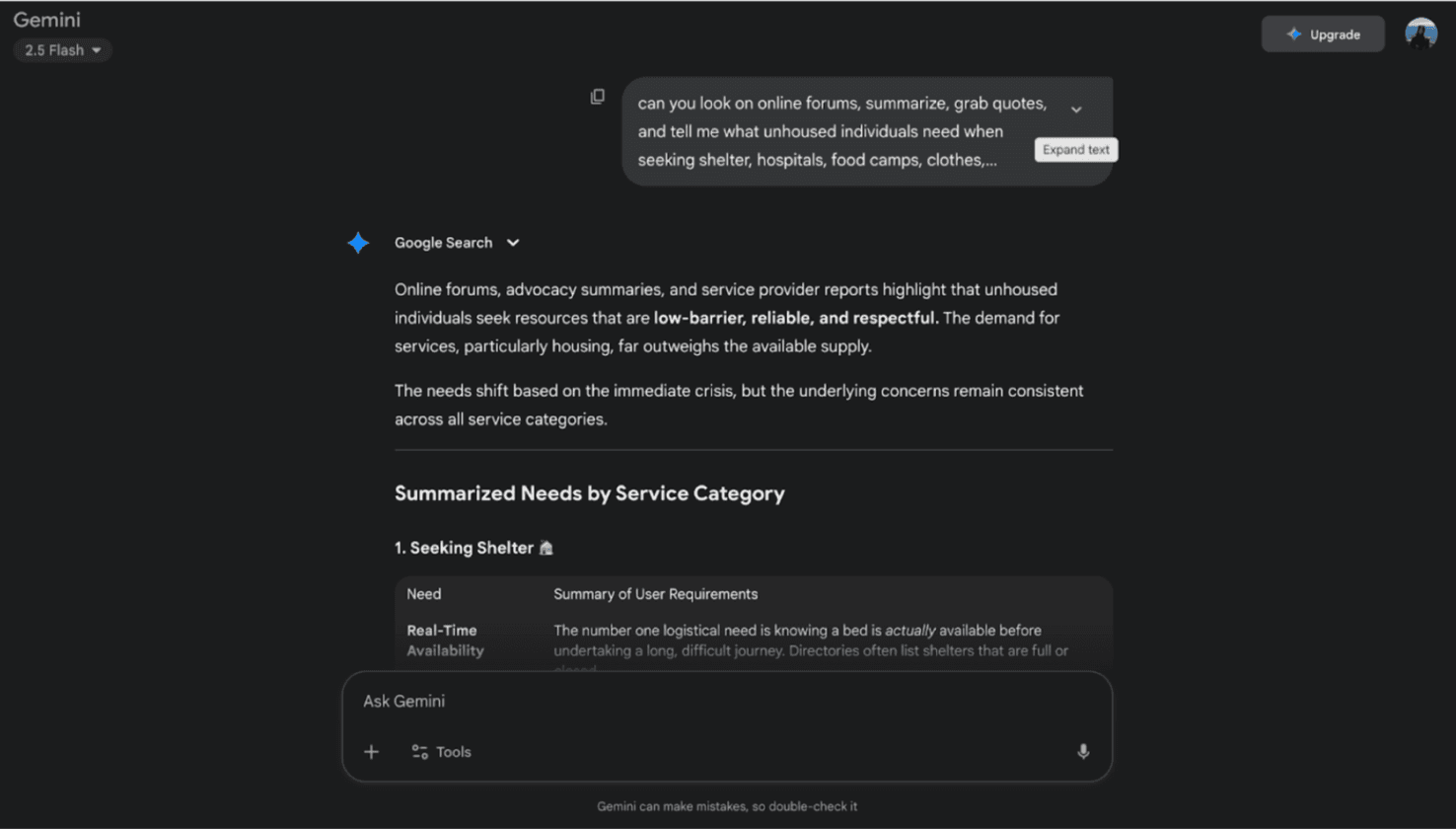
A lot of unhoused individuals wrote about losing their ID and can't find a way to get verified.
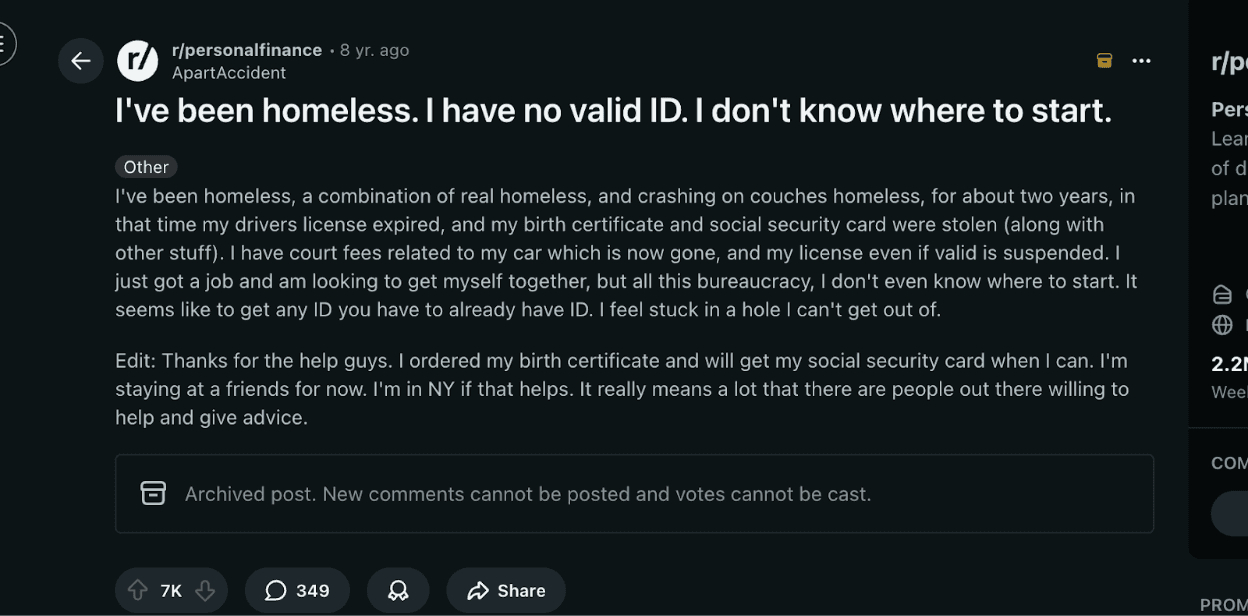
Through our research, we found that identification to find long term housing was a common concern with unhoused individuals.
“In the survey, more than half of participants (53%) noted a lack of documents as a barrier to finding permanent housing”
- The California Statewide Study
of People Experiencing Homelessness, 2023
“The hardest thing and the most consistent barrier to housing was that a lot of my clients did not have any identification and had no pathway to getting any.”
- Reddit User (echoed by many others)
How can we make getting identified easy?
We shared ideas in a circle until we identified solutions for the gaps. We wrote down key features in a list on Google Docs of we wanted to include through rapid ideation.
Key Features on each page.
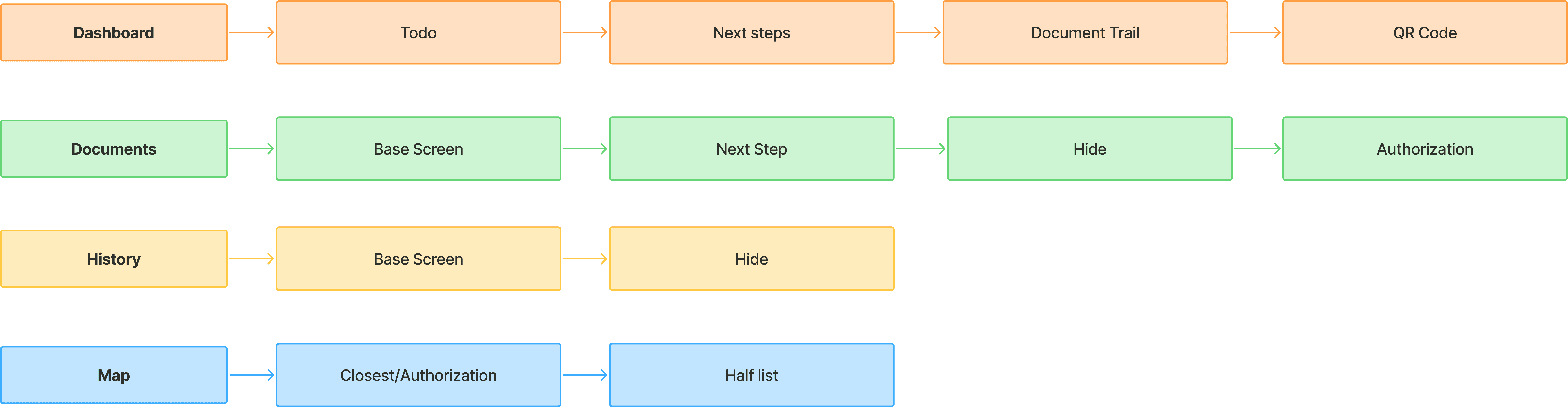
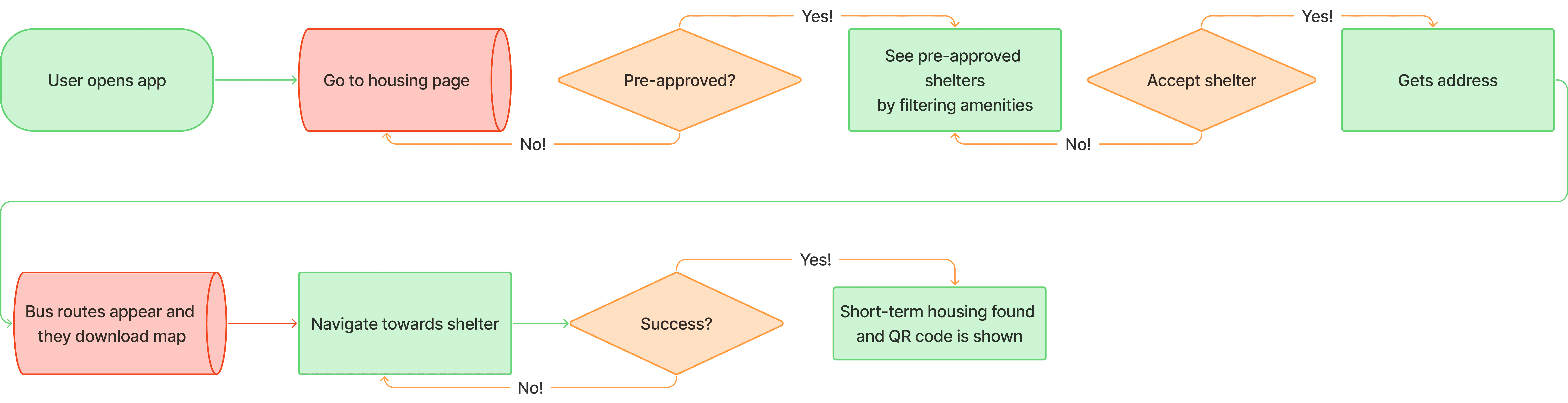
The goal is to find pre-approved shelter.
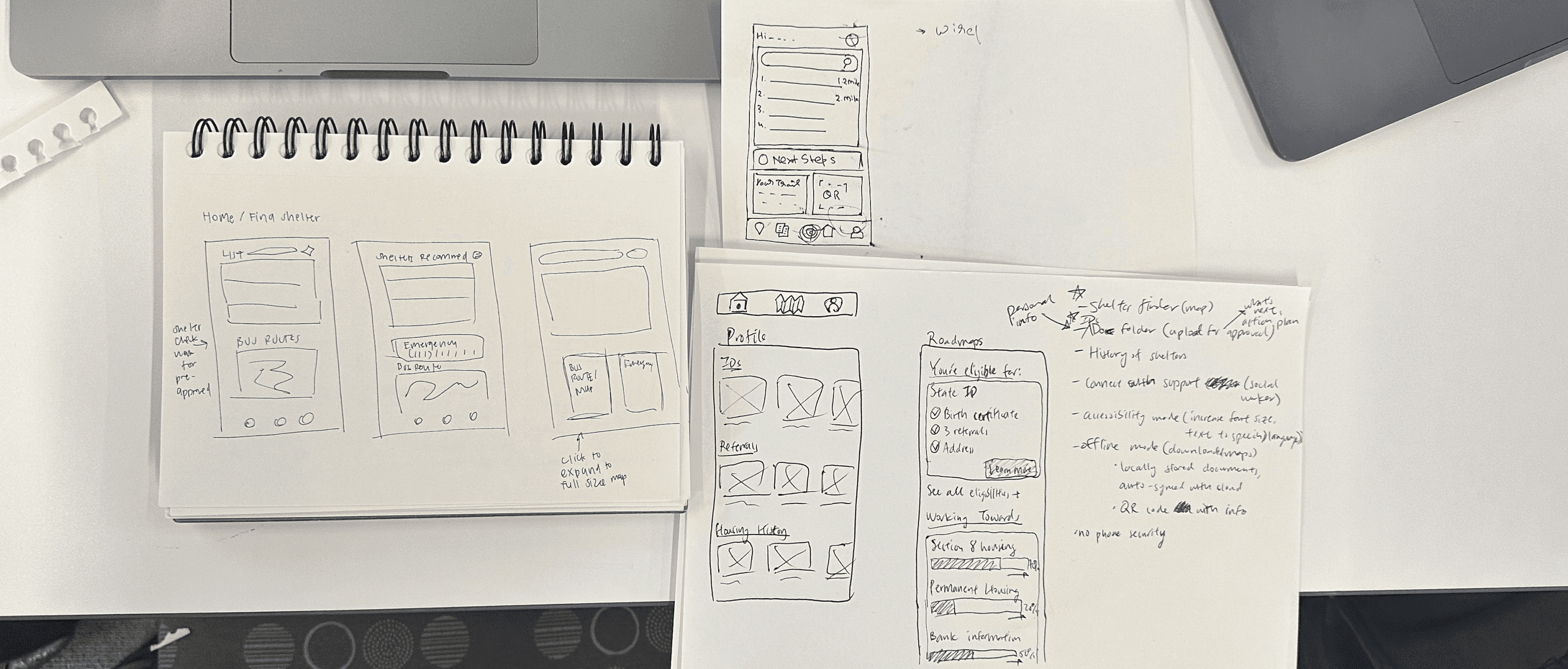
Took most important features that differentiate our app and created wireframes
Designing for accessibility and offline access.
Ensuring that the app allowed for offline usage was a key factor of our design as for most use cases, a lot of our target demographic may not have a data plan. We planned to cater our design towards an authoritative feel yet modern.
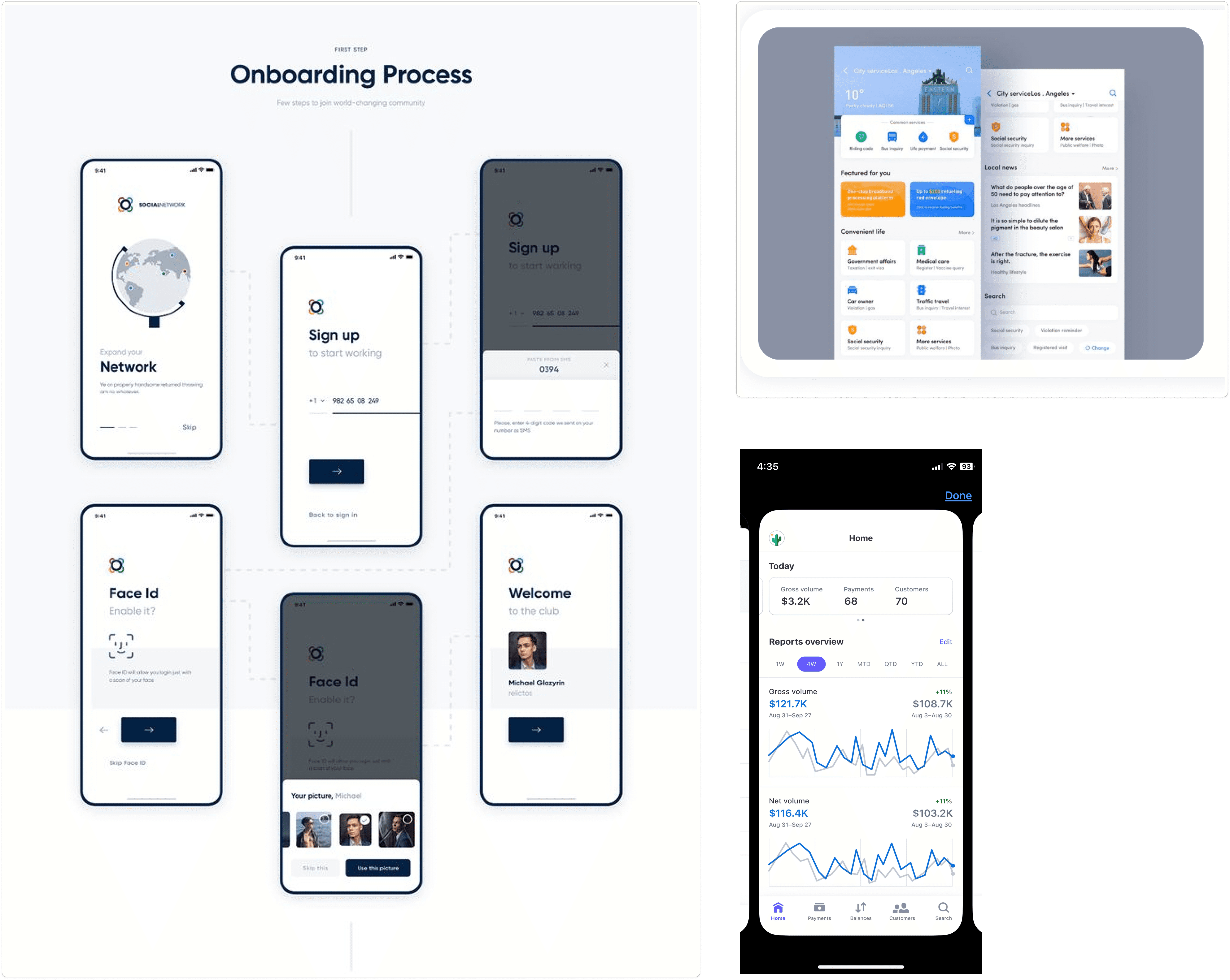
Moodboard
We took inspiration from other government apps that were simple and straightforward.
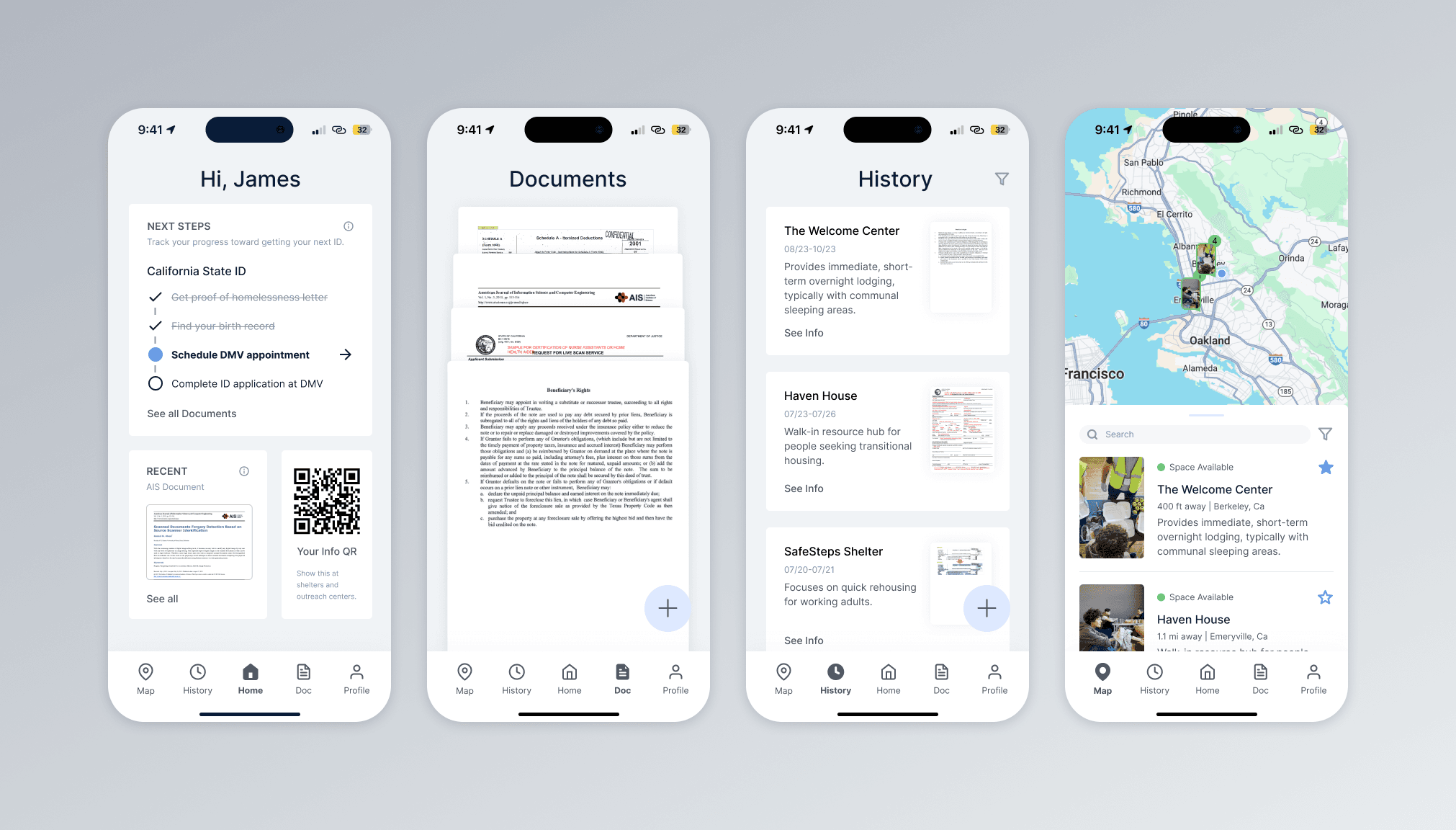
ID Bridge helps unhoused individuals quickly rebuild a verified document trail, connect with social workers for next steps, and access shelter routes and availability—even in offline mode.
How does this answer the problem
Users could upload all documents and referrals from others they know to get identified. QR Code with your history allows for quick verification.
A user can view the closest shelters that are available and how many spots are left. This will ease pain points of traveling far for full capacity shelters.
Speed & Breadth of Insights, Bias Detection & Synthesis Support, Accessibility for Resource
Loss of Human Context & Empathy, Bias Amplification & False Authority, Erosion of Critical Thinking
Using AI in research feels like adding a second brain, powerful, fast, but emotionless. It can accelerate discovery, yet it cannot replace empathy.
Rapid Idea Generation & Divergence, Cross-Domain Inspiration, Iteration at Scale
Surface-Level Creativity, Homogenization of Ideas, Dependence & Creativity Fatigue
In our ideation phase, AI helped us diverge faster, but the most resonant ideas emerged when we refined them through human empathy
Faster Prototyping & Visual Exploration, Personalization & Adaptive UI Testing
Loss of Designer Intent & Authenticity, Accessibility and Validation Gaps
Access all important information easily and get verified.
Let's reflect…
I truly loved working with my team and found this 6 hour challenge to be super rewarding. I learned a lot abut the use of AI in research, ideation, and design and how it could accelerate the process. While the use of AI in research is beneficial and speeds up the process, AI Quotes and data can get mixed with real data thus making us back track to verify they are real. All in all, design cannot be replaced with AI as it lacks the empathy a human has for other humans.
